
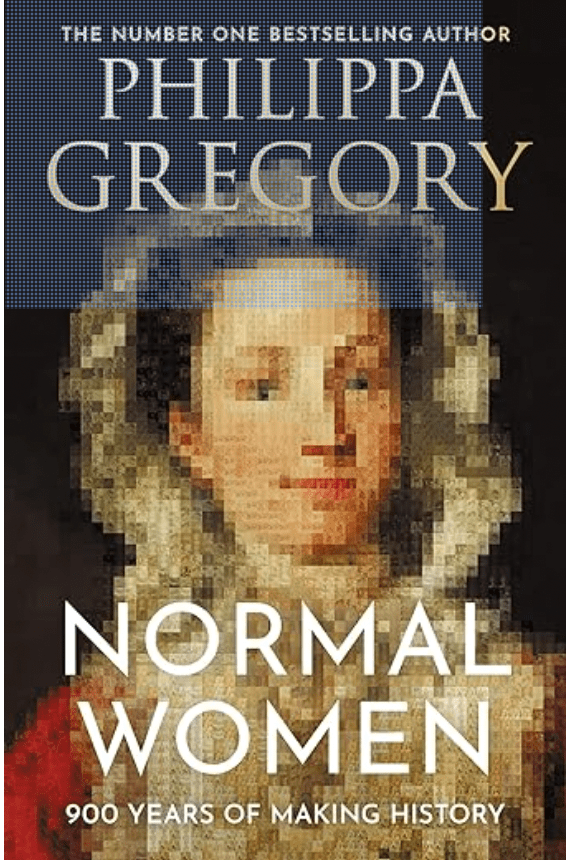
Philippa Gregory spent ten years researching 900 years of women making history with names of ordinary women featured in this book, Mathilda Penne, Skinner, Joanna de Boneye, Widow, Joan Hampcock and Isabella Brembole, agitators. Elena Couper, pin-maker, Katherine Cantilupe who claimed her husband had no genitals. Prone Joan, Prostitute. Edith Swanders, thief , Kate Slater, factory worker. Mary Davis gravedigger, Johanna Mason, nun accused of sleeping with another nun Anne Bonny, cross-dressing pirate. Elizabeth Wilkinson, Prizefighter.
Using research skills honed in her work as one of our foremost historical novelists, Gregory trawled through court records to find ighway women, beggars and shepherdesses, through newspapers and diaries to find murderers and brides, housewives and pirates, female husbands and hermits. The ‘normal women’ you will meet in her pages went to war, ploughed the fields, campaigned, wrote, and loved. They rode in jousts, flew Spitfires, issued their own currency and built ships, corn mills and houses as part of their everyday lives They committed crimes, or treason, worshipped many gods, cooked and nursed, invented things and rioted. A lot. They built our society to be as diverse and varied as the women themselves. They are there in the archives – if you look – and they made our history.
Gregory, aims elevate ordinary women as the engine room of social and cultural change, from the Bayeux Tapestry- which features 632 men, 200 horses, 55 dogs, 93 penises, and five women mostly being bludgeoned and ending with the Church of England’s grudging acceptance that women have spiritual equality, which represents she says, the “last stand of the patriarchy on the last hill”.
Although women have always been regarded as naturally inferior, in reality they make the world go round. They are the healthy, strong, intelligent, spiritual and sexual beings who did everything nurtured families, farms and businesses, dug graves, birthed babies, staffed factories, led riots and held communities together.
The Black Death in the mid-14th century was a game-changer for female influence. As the population of England halved , the church got desperate, declaring that if no priest or man was available the dying could confess their suns even to women. So many men died that women found themselves taking over family plot of land and inheriting businesses, Labourers were in such demand that women earned equal wages, took up 30 per cent of apprenticeships and found better jobs, If leprosy was caused by menstruating women, women in general must have caused the Great Plague y their wantonness, wearing clothes so tight that they wore a fox tail hanging down inside their skirts at the back to hide their arses.
Several medieval cities banned prostitution, others required them to wear a striped or yellow hood to identify them as immoral women.
The Treason Act of 1351 established husband killing as a crime just below killing the King, punishable by burning alive although the killing of wives by husbands was generally considered accidental. Peasants revolt against tax was largely a female rising. There was no legal end to marriage often a wife sale in which women were paraded round the market by their husbands sometimes with a halter round their necks or waists to be sold to the highest bidder. By 1600s the golden age for women was over. Under Oliver Cromwell men tightened their grip on society, women were increasingly enclosed forbidden to wander the streets, or visit ale shops or coffee houses.To do so ran the risk of being imprisoned for prostitution. Women have always been successfully subversive in small ways, cross-dressing for instance was common form of misrule., but cause a moral panic among men, who saw women in men’s clothes as a grave challenge to their authority –never mind being disturbingly erotic.
The London Courts recorded frequent cases of prostitutes dressed in breeches doublets or priest’s robes ( the latter worn by women, who specialized in sex with priests, Mary Frith the Moll Cutpurse of legend was a highway woman, bawdy and sexually active wore a man’s doublet and breeches , smoked a pipe and went on stage to become the first female stand-up comedian. They created their own sport. .Women’s footracing, football, cricket, boxing and prizefighting took place over the centuries. By mid 1700s there were footraces organised across the country, called smock or shift races with dresses and petticoats as prizes. Contestants raced barefoot, wearing waistcoats and drawers or sometimes naked. They might riot when provoked, but women have always wanted real war to end. In 1643, during the English Civil War, 5000-6000 women wearing white ribbons in their bonnets demonstrated outside parliament.
Chaste women needed to be seduced for male pleasure. Rape became sanctioned as an involuntary male sexual impulse, an irresistable act by an attractive man on a contrary woman. In 1480 William Pye, a church clerk raped the married Alice Martin that act was described in the language of heroic love poetry : he wielded his carnal lance to the point where her life was despaired of. Then convictions of rape were fewer than 1 per cent. Female orgasms have been bothering men for over a millennium. In the Medieval times they maintained the Aristotelian belief that conception was dependent on orgasam and any woman conceiving from rape must therefore jave consented. Then men decided upperclass women should be frigid to distinguish them from servants convienently so lusty that they could service men’s needs. But thought of female desire preyed on their minds. “A female has so many opportunities of secretly indulging” according to quote from the philosopher David Hume.
Even in 1900, educated women were advised that they were incapable of orgasm and should not feel pleasure at all. Thier mental health was at stake if the did Dr Bennet, a Victorian gynaecologist advocted putting leeches insdie the vagina and onthe neck of the uterus to cure disturbed rebellious women.
Normal Women 900 years of Making History by Philippa Gregory, William Collins, £25, 678 pages
 The neptune Herald
Leave a comment