
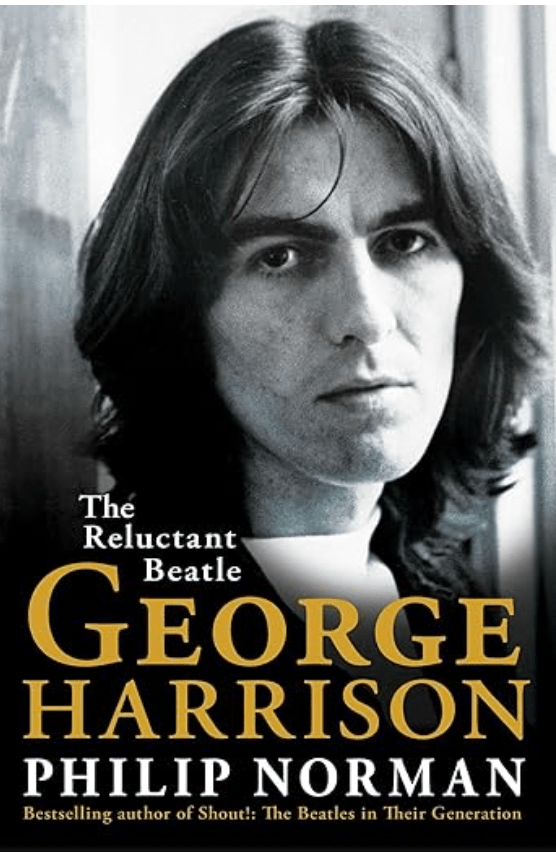
George Harrison hailed from a working-class family in Liverpool. When he was 14, an amiable Paul McCartney invited him to join a loosely congregated skiffle group called the Quarrymen, to which the groups’ acid -tongue 17-year-old leader John Lennon responded “Who’s that bloody kid who’s always hanging around”.
Despite being hailed as one of the best guitarists of his era, George Harrison, particularly in his early decades, battled feelings of inferiority. He was often the butt of jokes from his bandmates owing to his lower-class background and, typically, was allowed to contribute only one or two songs per Beatles album out of the dozens he wrote.
Even John Lennon’s aunt Mimi, a frightful snob, took in Harrison’s teddy boy gear, Scouse accent and sticky-out ears and dismissed him as exactly the kind of riff-raff her nephew should not be hanging around with.
After Harrison became a Beatle, as one associate remembered him as “ the Invisible Man”. Harrison was routinely subjected to all manner of indignities – he lost his virginity in a Hamburg bunk bed while John, Paul and the band’s original drummer Pete Best looked on and when vomited on the floor of a Hamburg flat in a drunken stupor one night. The other Beatles christened his puke “the Thing” and decorated with matchsticks. He felt his moment had come when All Things Must Pass , his triple album released in November 1970 in the wake of Beatles falling apart, stamped all over the others’ solo efforts by going straight to No 1. Lennon even cut that down. Lennon appraised Harrison’ signature spiritual singalong with a demeaning “all right’ claiming that Harrison only ever managed to bash out a tune in the first place because “he was working with two f***ing brilliant songwriters and he learned a lot from us”.
As Ringo Starr observed, “There was the love-and-beads personality and the bag of anger”. The first really did blossom in India, whether it meant putting in the hours to learn a sitar under the great Ravi Shankar or finding tranquility in Rishikesh in the company of the Maharishi, The problem with the spiritual pursuit is that it can be mistaken for a quick road to enlightenment, particularly among westerners discovering Eastern traditions and Harrison proved to be no more rapidly enlightened than the next would-be yogi. Derek Taylor the Beatle’s press officer recalled a transatlantic flight on which Harrison was chanting his mantra, when the concerned flight attendant asked if everything was all right, he snapped F*** off Can’t you see I’m meditating. His first wife Pattie Boyd understood Harrison, when she lived with him in a gothic mansion near Henley called Friar Park, filled with Hare Krishnas and rockers, leading her to ask Harrison’s assistant Chris O’Dell, “ What’s he got in his hands today, the prayer heads or the cocaine?”. Boyd made up a third of the most famous love triangle in rock history, with Eric Clapton not only writing Layla about her, but also consulting the New Orleans musician Dr John who he suspected of having voodoo powers about casting a love spell. After Harrison caught her canoodling with Clapton in the garden of Robert Stigwood’s house, Clapton announced in the faux-casual argot of the era “ I have to tell you, man, I’m in love with your wife”.
Harrison dealt with it the only way an emotionally constipated former Beatle knew how: by challenging Clapton to a guitar duel. All of this imparted in an affectionate but detached tone , leading to an impression of a man who although burdened with an apparent inability rolto lighten up. His 1971 concert for Bangladesh started the trend of charity rock endeavors and collected together everyone from Bob Dylan to Shankar in what Rolling Stone magazine called “ a Brief incandescent revival of all that was best in the sixties”. He funded Monty Python’s Life of Brian by actually netting the house on it, negotiating a bank loan secured against Friar Park.
Harrison settled down with his second wife Olivia, and their son Dhani. He reconciled with McCartney while working on the enormous Beatles Anthology project in the mid-nineties and rediscovered his sense of humor too. In 1999, after a mentally ill intruder at Friar Park stabbed him repeatedly, Harrison announced that the intruder “certainly wasn’t auditioning for the Traveling Wilburys”.
The Reluctant Beatle George Harrison by Philip Norman, Simon & Schuster, £25, 554 pages.
 The neptune Herald
Leave a comment