
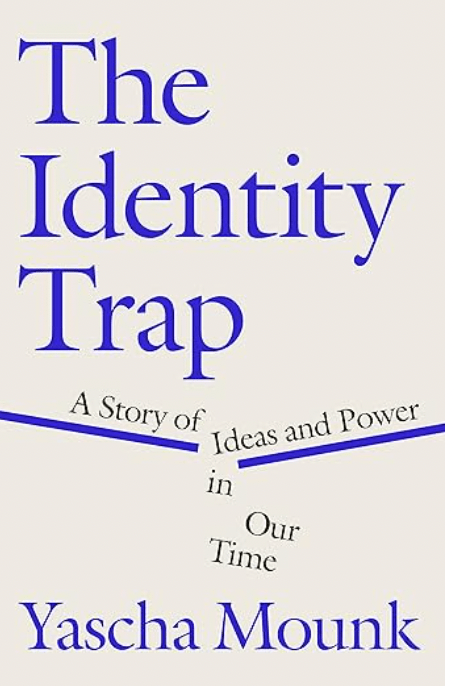
The Identity Trap provides truth and clarity where they are needed most.
Yascha Mounk, a leading public intellectual traces the origin of a set of ideas about identity and social justice that is rapidly transforming America–and explains why it will fail to accomplish its noble goals.
The West has become uncomfortable place for liberals as populist right entrenched themselves as champion of the majority against the self-interest liberal elite.
For much of history, societies have violently oppressed ethnic, religious, and sexual minorities. It is no surprise that many who passionately believe in social justice came to believe that members of marginalized groups need to take pride in their identity to resist injustice. The frustration has helped cancelling culture, and the assertation that human should primarily be understood in terms of group identities such as race, gender and sexual orientation.
But over the past decades, a healthy appreciation for the culture and heritage of minority groups has transformed into a counterproductive obsession with group identity in all its forms. A new ideology aiming to place each person’s matrix of identities at the center of social, cultural, and political life has quickly become highly influential. It stifles discourse, vilifies mutual influence as cultural appropriation, denies that members of different groups can truly understand one another, and insists that the way governments treat their citizens should depend on the colour of their skin.
This, Yascha Mounk argues, is the identity trap. Though those who battle for these ideas are full of good intentions, they will ultimately make it harder to achieve progress toward the genuine equality we desperately need. Mounk has built his acclaimed scholarly career on being one of the first to warn of the risks right-wing populists pose to American democracy. But, he shows, those on the left and center who are stuck in the identity trap are now inadvertent allies to the MAGA movement.
Monuk argues the change by citing the evolution of the American Civil Liberties Union. In 1977, he reminds us, the ACLU defended the right of a group of Chicago-based Nazis to march through Skokie, a suburb of Chicago with a large Jewish population.
In The Identity Trap, Mounk provides the most ambitious and comprehensive account to date of the origins, consequences, and limitations of so-called “wokeness.” He is the first to show how postmodernism, postcolonialism, and critical race theory forged the “identity synthesis” that conquered many college campuses by 2010. He lays out how a relatively marginal set of ideas came to gain tremendous influence in business, media, and government by 2020.
The Identity Trap: A Story of Ideas and Power in Our Time by Yascha Mounk, Allen Lane £25,, Penguin Press $32, 416 pages.
 The neptune Herald
Leave a comment