
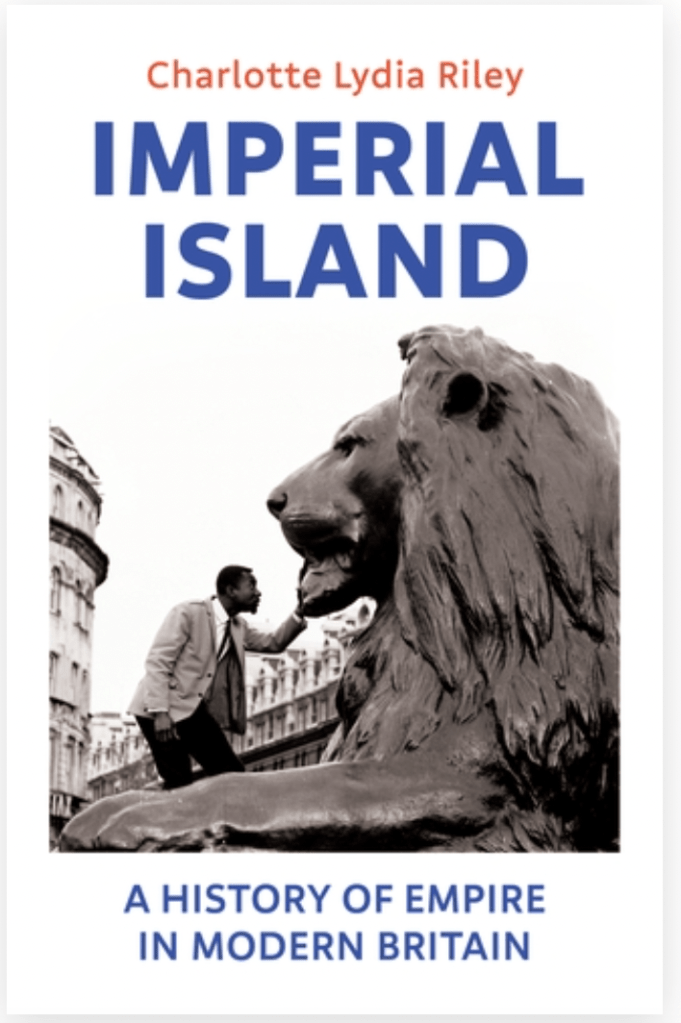
Imperial Island reveals how empire and its ever-present aftermath have divided and defined Britain over the last seventy years and shaped modern Britain. Open-minded historian, Charlotte Lydia Riley in her withering indictment of cruel Britannia, describes a chilling history of institutional and public prejudice, and skillfully builds up a picture that’s been hiding in plain sight for far too long. The book is rich on civil society campaigns against racism, everyday experiences of new migrants and documents the political role played by the anti-war left in modern Britain. The historic heart of London’s imperial dockland, has long been the entry point for migrant and refugee communities with more than 100 languages spoken within the Borough of Newham.
Her narrative starts with the arrival in the borough after the first world war of a former soldier, the Methodist and celebrated anti-racist activist, Kamal Chunchie. originally from Sri Lanka but settled in an area “ Draughtboard Alley” because of its intermixing and went on to live a rich life of community leadership on behalf of Britain’s ethnic minorities. His story throws light into what follows, a history of modern multicultural Britain and the myriad ways in which it has been shaped by empire and imperialism. The British war effort in the second world war, generated flows of people to the “motherland” in the postwar period that transformed the UK itself, and generated profound debates about multiculturalism, foreign and overseas aid policies, as well as national identity and history. These continue to reverberate even today.
The study of familiar political events such as the Suez Crisis, decolonization in the 1950s, 60s and the Falklands and Iraq wars, with the social histories of migrant communities in the UK and emigrants to the British world of the Commonwealth. Imperial legacies persists, not simply in the assertion of global power and the exercise of military force by the UK, but in the liberal humanitarianism of overseas aid and the comforting colonial charity of events like the Live Aid concert of 1985. Even the anti-apartheid movement bore the imprint of the Empire, mobolising as it did a sense of responsibility for the Global South and the fate of South Africa. Satanic Verses highlighted the intolerance towards Muslim communities , not threats to free speech and expression.
Towards the end of the book we meet Chunchie again, but this time in the steel and glass cityscape of the post-industrial docklands, where through a popular vote in 2021, the street on which London’s new City Hall stands was renamed in his honour.
She rescues the popular understanding of the empire from the cliché of Victorian pith helmets, instead of showing how the British Empire.
East India House located in Leadenhall Street, in the City of London, was the London headquarters of the East India Company, who received a Royal Charter from the British monarch Elizabeth I, to trade with the East Indies, as the company went on to colonise the Indian subcontinent. East India Company established on 31st December 1600, had their first company factory in Machilipatnam in Andhra Pradesh along the Coromandel Coast, and had trading posts inSurat (1619) and Madras (1639) and by 1647 the company had 23 factories and settlements in India, and 90 employees. The Crown turned Bombay over to the company in 1668, and the company established a presence in Calcutta in1690. From Leadenhall offices much of British India was governed until the British government took control of the company’s possessions in India in 1858. The Leadenhall street building was demolished in1861 which is the present day site of Lloyds of London, the programme used Goldsmiths Hall in the City of London for their headquarters and since 17th century the East India
Imperial Island: A History of Empire In Modern Britain by Charlotte Lydia Riley, Bodley Head £25m 384 pages.
 The neptune Herald
Leave a comment