
When the first Chinese labourers began to sojourn and settle abroad, restaurants appeared in their wake. Yet Chinese food has the curious distinction of being both one of the world’s best-loved culinary traditions and one of the least understood. For over a century the overwhelming dominance of simplified form of Cantonese cooking ensured that few foreigners experienced anything of its richness and sophistication – but today that is beginning to change.
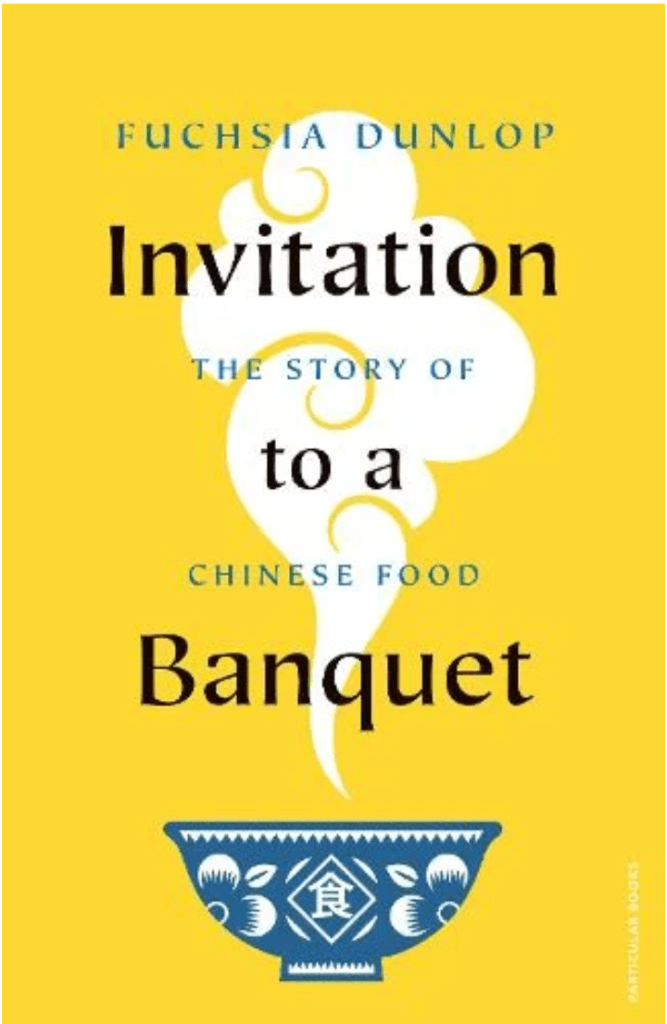
James Beard Award-winning cook and writer Fuchsia Dunlop explores the history, philosophy and techniques of china’s rich and ancient culinary culture. Fuchsia Dunlop once cooked 350 duck tongues for a banquet – in Oxford, or where she had first taste of fermented camel’s milk at a Kazakh circumcision party in Urumqi, or that Yi Yin, the master chef I the service of Duke Huan, the 7th century BC ruler of the State of Qi (present day Shandong), was said to possess a perfect palate.
Each chapter examines a classic dish, from mapo tofu to Dongpo Pork, knife-scraped noodles to braised pomelo pith, to reveal a singular aspect of Chinese gastronomy, whether it’s the importance of the soybean, the lure of exotic ingredients or the history of Buddhist vegetarian cuisine. Interviewing local food producers, chefs, gourmets and home cooks, as she tastes her way across the country, Fuchsia invites readers to join her on an unforgettable journey into Chinese food as it is made, cooked, eaten and considered in its homeland.
We hear about Anji bamboo shoots with Junhua ham, about yipin guo or top ranking pot ( a soup concocted from fine ingredients that is according to Dunlop , “like listening to the start of a symphony”. We discover the complex relationship between foreign influences and post-Communist Chinese cuisine, embodied in lousong tang or “Russian Soup”.
Food was fundamental to the Chinese conception of the state during the Zhou dynasty (c1046 -356 BC) that the emperor’s diet and his symbolic role in agriculture were prescribed, and the imperial calendar marked with the seasonal rites required to ensure abundant crops. Thousands of year before , Chinese food culture rested on settled farming that produced first millet, then rice in the South, arrived 9000 years ago and wheat in the North from about 4, 000 years ago.
Today there are huge regional variations from the fierce spices of Sichuan to the gentler taste of Guangdong. The Chinese food according to Dunlop, are full of wet, Squelchy, smacky, sucky noises, while the perfect texture of chicken testicles is “exquisitely fine and smooth, delicately soft and tender but with a certain springiness.” There is a superstition that by eating bear’s paw or tiger foetus the diner acquires some of the animal’s properties. It is this conviction that leads China’s wealthy diners to deft conservative bans.
The swim bladder of Totoaba is prized in Chinese cuisine for its texture.
Chinese gastronomy is poorly understood and undervalued, as many immigrants who opened restaurants elsewhere in the world were not themselves trained chefs and adapted their offering to the uneducated tastes of their clientele. Ignorance and prejudice often create an expectation that Chinese food in the west should be cheap.
Invitation to a Banquet: The Story of Chinese Food by Fuchsia Dunlop, Particular Books £25, 480 pages.
 The neptune Herald
Leave a comment