

A new epic of love, faith, and medicine, set in Kerala and following three generations.
In The Covenant of Water, the physician-writer Abraham Verghese’s riveting epic opens with a mother and her 12-year-old daughter crying. 1900 in Travancore, south India’s Malabar Coast, the frightened girl is to marry a man who is 40 and a widower. The family is part of a Christian community that traces itself to the time of the apostles, but times are shifting, and the matriarch of this family, known as Big Ammachi, will witness unthinkable changes at home and at large over the span of her extraordinary life. A shimmering evocation of a lost India and of the passage of time itself. The Covenant of Water is a hymn to progress in medicine and to human understanding, and a humbling testament to the hardships undergone by past generations for the sake of those alive today. She will do as she is told but she cannot imagine what lies in the future. Her mother consoles her but soon her voice subsides, her breathing slows, and then she is asleep, leaving her daughter awake. The body’s need for rest overtakes the mother’s anguish. The next day the girl’s journey on a boat far from her childhood home. Big Ammachi, as the girl will come to be known, will grow to love her husband, he in turn will treat her like the child she is, a daughter named baby Mol,. They live on their estate, parambil, the lbaour handled by a man named Shamuel, who is part of the landless caste called the Pulayan. Big Ammachi has a son, Philipose, and he and Shamuel’s young son, Joppan, are playmates, but the school official prohibits Joppan from attending class, Big Ammachi finds herself struggling to explain the caste system that is forcing the friends to love increasingly segregated lives. “Its roots are deep and so ancient that it feels like a law of nature, like rivers going into the sea. The caste system is an abomination. Decades later, Philipose and Joppan will have uncomfortable conversations about what is owed by landowners to the Pulayan, but any lingering anger that Joppan might have is put off for another generation. The story of three generations in Kerala, south India spanning 1900 to 1977, The Convenant of Water reveals some of the contradictions of living in a colonised segregated society. The society is divided by the class system In England and India it is the caste system. Dr Digby Kilgour, the lonely son of an impoverished alcoholic mother, flees Scotland for colonized India, only to discover that he is “oppressed in Glasgow: oppressor here. The thought depress him”.
Tensions rise as that colleague makes a fatal medical error and place the blame on Digby. Any confrontation that would have occurred, is derailed by an accident that conveniently pushes Digby’s storyline in another direction. Big Ammachi watches her family expand and shrink through births and deaths that involve a family curse connected to water. India gains independence. Her granddaughter, enters medical school and tries to find the cause for this curse.
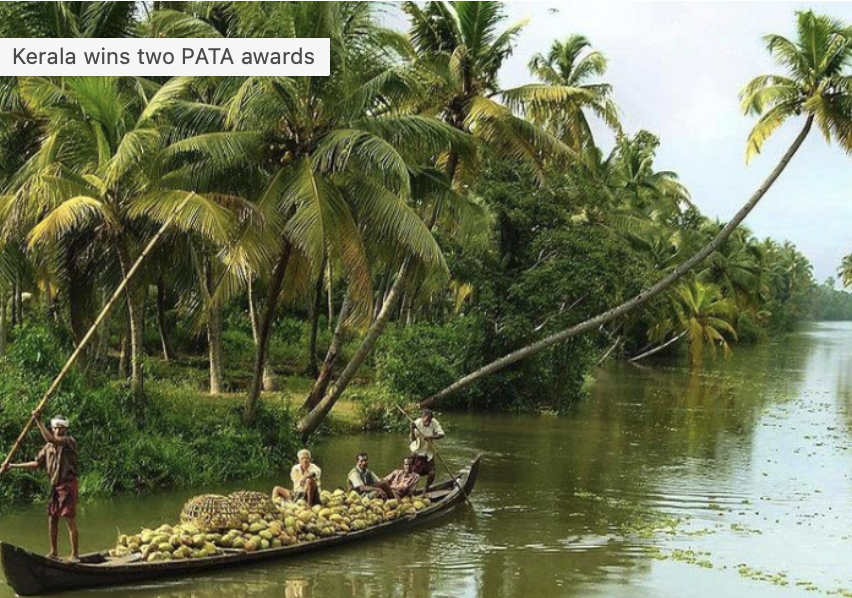
Big Ammachi, when she was the young bride, looks out at her new home, “ a child’s fantasy world of rivulets and canals, a lattice work of lakes and lagoons, a maze of backwaters and bottle-green lotus ponds, a circulatory system because, as he father used to sauy all water is connected.
The Covenant of Water by Abraham Verghese, Grove Atlantic £20
 The neptune Herald
Leave a comment