
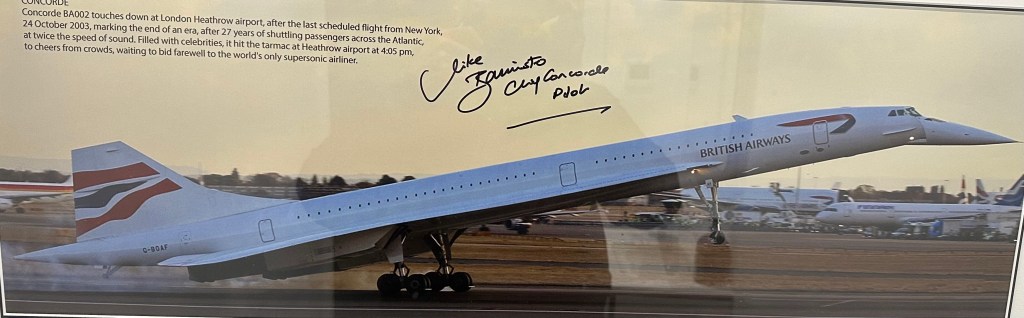
24 October 2003, marking the end of an era, after 27 years of shuttling passengers across the Atlantic,
at twice the speed of sound.
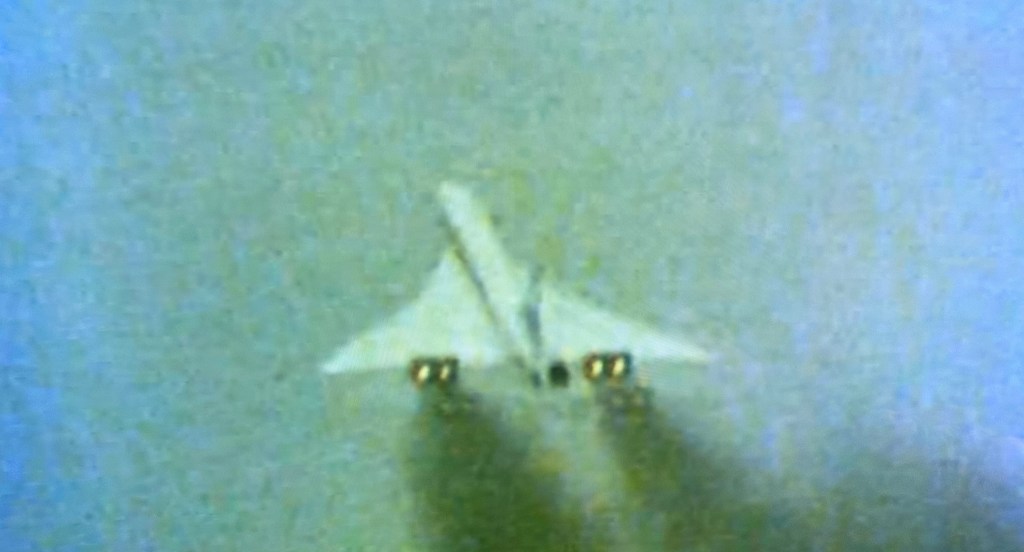
Concorde a tailless aircraft design with a narrow fuselage permitting a 4-abreat seating for 92 to 128 passengers, an ogival delta wing and a droop nose for landing visibility, powered by four Rolls-Royce/Sneoma Olympus 593 turbojets with variable engine intake ramps and reheat for take-off and acceleration to supersonic speed, which was inconceivable. Constructed out of aluminium, the first airliner to have analogue fly-by-wire flight controls, maintaining a supercruise up to Mach 2.04 (2,170km/h: 1, 170 kn) at an altitude of 60,000 ft (18.3km).
In 1976 delays and cost overruns increased the programme cost to 2.1 billion in 1976.
The Aerospatiale/BAC Concorde, a Franco-British supersonic airliner jointly developed and manufactured by Sud Aviation ( Aerospatiale) and the British Aircraft Corporation, after studies started in 1954, France and UK signed a treaty establishing the development project on 29th November 1962, costing over £70 million (£.139 billion by 2021). After constructing six prototypes which began in February 1965, the first flight took off from Toulouse on 2 March 1969. Initially the market was predicted for 350 aircrafts as the manufacturers received up to 100 option orders from several major airlines.
Concorde entered service on 21 January 1976 with Air France from Paris-Roissy and British Airways from London Heathrow, transatlantic flights to Washington Dulle from 24 May, and to New York JFK from 17 October 1977. Both Air France and British Airways remained the sole customers with seven airlines each, contributing to 20 supersonic flight more than halved travel times. The only competitor was the Tupolev Tu-144 carrying passengers from November 1977 until May 1978 crash, and another potential competitor the Boeing 2707, which was cancelled in 1971 before any prototypes were built.
On 25 July 2000, Air France flight 4590 crashed shortly after take-off with all 109 occupants and four on ground staff killed, the only fatal incident involving Concorde, and commercial service was suspended until November 2001, eventually leading to Concorde aircraft being retired in 2003 after 27 years of commercial operations.
The origins of Concorde project however dates back to early 1950s, when Arnold Hall, director of Royal Aircraft Establishment (RAE), asked Morgan to form a committee to study the supersonic transport (SST) concept, which met for the first time in February 1954 and delivered their first report in April 1955. As the drag at supersonic speeds was strongly related to the span of the wing, led to the use of short-span, thin trapezoidal wings as seen on the control surfaces of many missiles, or in aircraft such as the Lockheed F-104 Starlighter interceptor or the planned Avro 730 strategic bomber that the team studied. The short span produced very little lift at low speed, which resulted in extremely long take-off runs and high landing speeds.
Two models of Concorde 001, and Concorde 002 was created. Concorde 001 was modified with rooftop porthole for use on the 1973 Solar Eclipse mission.
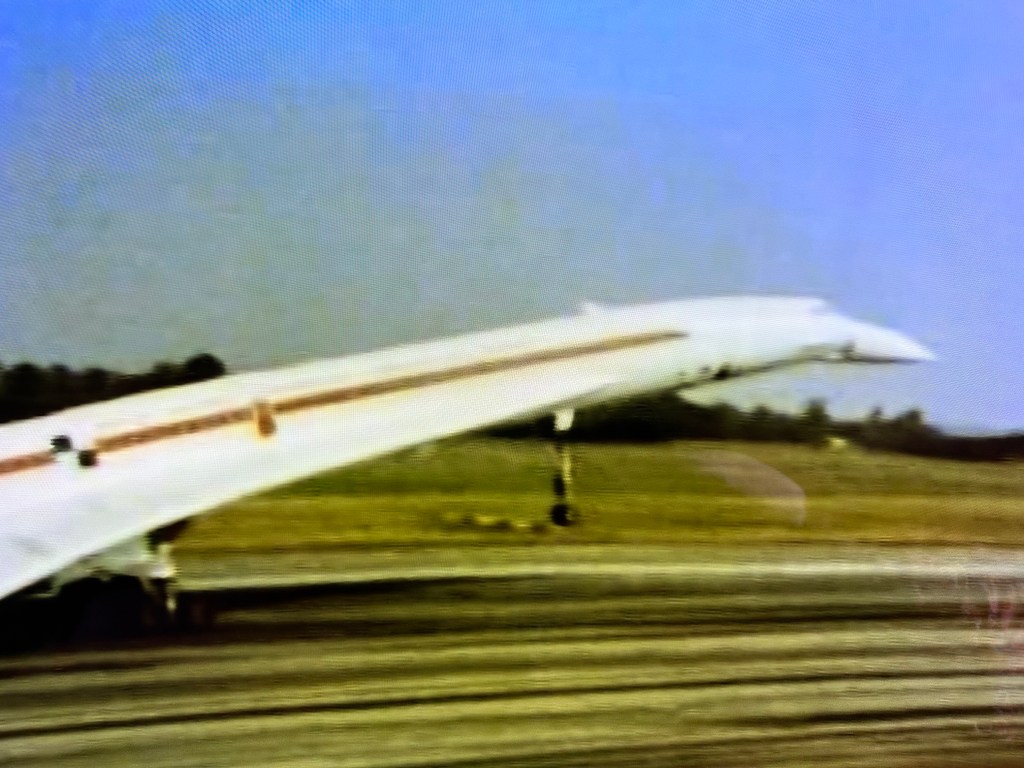
Scheduled flights began on 21 January 1976 on the London-Bahrain and Paris-Rio de Janeiro (via Dakar) routes, with BA flights using Speedbird Concorde call sign to notify air traffic control of the aircraft’s unique abilities and restrictions. The Paris-Caracas route (via Azores) began on 10 April. The US congress banned Concorde landings in the US, due to citizen protest over sonic booms, preventing the launch of North Atlantic routes, although the US Secretary of Transportation William Coleman, gave permission for Concorde service to Washington Dulles International Airport and Air France and British Airways Simultaneously began a thrice-weekly service to Dulles on 24 May 1976. Due to low demand, Air France cancelled its Washington service in October 1982, while British Airways cancelled it in November 1994.
In December 1977, British Airways and Singapore Airlines started a Concorde for flights between London and Singapore International Airport at Paya Lebar via Bahrain, with BA’s Concorde G-BOAD, the service was discontinued after three return flights because of noise complaints from the Malaysian government. A dispute with India prevented Concorde from reaching supersonic speeds in Indian airspace, so the route was discontinued in 1980.
During the Mexican boom Air France flew Concorde twice weekly to Mexico City’s Benito Juarez International Airport via Washington DC or New York City from September 1978 to November 1982 and the worldwide economic crisis during that period resulted in this route’s cancellation.
On 10 April 2003, Air France and British Airways simultaneously announced they would retire Concorde later that year, citing low passenger numbers following the 25 July 2000 crash. Airbus who acquired Aerospatiale in 2000, had made a decision in 2003 to no longer supply replacement parts for the aircraft. Although Concorde was technologically advanced its analogue cockpit was outdated. A lack of commitment from Director of Engineering Alan MacDonald was cited as having undermined BA’s resolve to continue operating Concorde.
On April 11, 2003, Virgin Atlantic founder Sir Richard Branson announced that the company was interested in purchasing British /airways’ Concorde fleet for one pound, but BA dismissed the idea prompting Virgin to increase their offer to £1 million each. Branson claimed that when BA was privatized a clause in the agreement required them to allow another British airline to operate Concorde if BA ceased to do so, but the government denied the existence of such a clause. The chances of keeping Concorde in service were stifled Airbus’s lack of support to continued maintenance.
 The neptune Herald
Leave a comment