
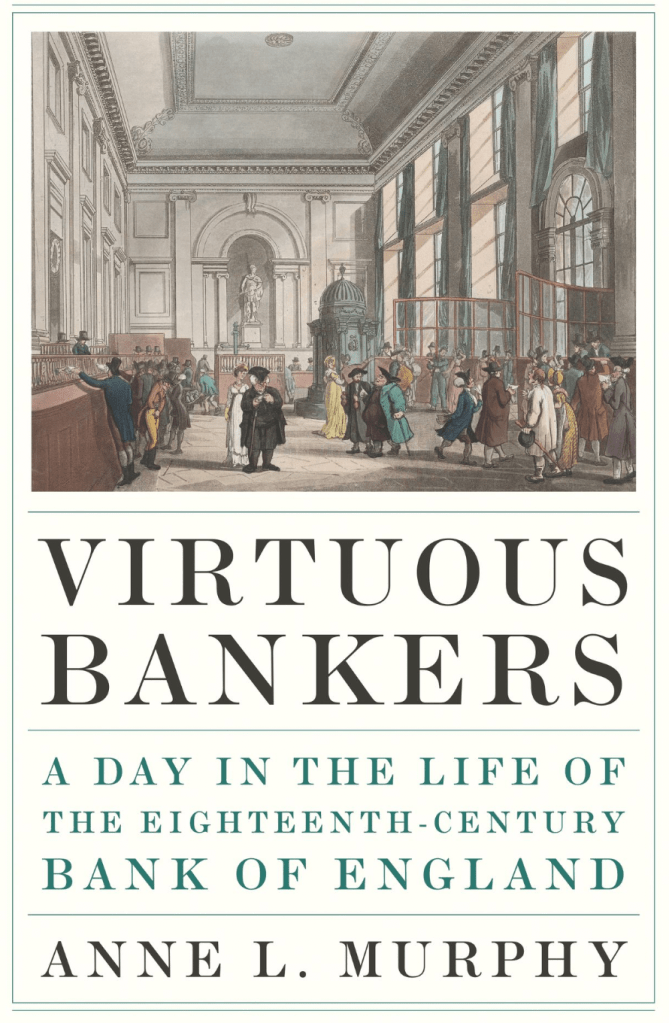

Bank of England, the eighteenth-century private institution that operated for benefit its shareholders became “ became a great engine for state” according to Adam Smith. Now life is getting uncomfortable in Threadneedle Street with rate rises, gloomy pronouncements about higher mortgage bills and news that bank of England is itself launching a review into how it constructs and deploys economic forecasts have all contributed to the new wave of intense criticism from pundits, politicians and citizens of the UK’s central bank and its actions. The Bank had come under fire for the first time in its 300-year history for its actions, a institution that prides itself on the central role it plays in both maintaining confidence in public finance and also in our wider understanding of Britain’s expected economic performance and questions about its competence and integrity.
Anne L Murphy a professor at the University of Portsmouth head back to the 18th century to describe the evolution of the systems of bureaucratic efficiency that would become the foundation on which the bank’s reputation “ a Great engine of state” was built. Murphy explores how this private organization became the guardian of the public credit upon which Britain’s economic and geopolitical power was based. Citing voluminous and detailed minute books of a Committee of Inspection that examined the Bank’s workings in 1783-84, Murphy frames her account as “a day in the life” of Bank of England, looking at a day’s worth of banking activities that ranged from the issuing of bank notes to the management of public funds and from the porters and “out-tellers”( the forerunner of messages” to the clerk and banknote printers, Murphy builds an intriguing picture of 18th century commerce. There are contemporary prints, replete with full-bodied financiers, to the office floor plans and details of the customer experience form whom the doors opened at 9am and closed at 5 pm. Murphy also discusses the bank as a domestic environment, a working environment, and space to be protected against theft, fire, and revolt. She offers new insights into the skills of the Bank’s clerks and the ways in which their work was organized, and she positions the Bank as part of the physical and cultural landscape of the City: an aggressive property developers, a vulnerable institution seeking to secure its buildings, and an enterprise necessarily accessible to the public she considers the aesthetics of its headquarters – one of London’s finest buildings – and the messages of creditworthiness embedded in that architecture and in the very visible actions of the Bank’s clerks. Murphy’s uniquely intimate account reveals how the eighteenth-century Bank was able to deliver a set of services that were essential to the state and commanded the confidence of the public.
Murphy explains in detail how the Bank came to be the guarantor of the nation’s financial integrity and reminds us that bankers today would not be so confident about their contributions to the public good as they are often seen as “dwelling in the bowels of hell rather than cathedrals of credit”.
Eighteenth century directors of the Bank “had little trouble convincing themselves that the business they managed was essential to the smooth functioning of the national economy and worthy of the country’s esteem”.
Since its inception in 1694, the Bankd had only 17 staff and was seen as a temporary solution for subsidizing the war (1689-97) that William of Orange fought against Louis XIV. It was expected that the £1.2mn war loan would be quickly repaid and that the Bank would move on to build its commercial business. However, repeated wars during the 18th century encouraged more government borrowing. By 1720, the Bank’s loans to government stood at more than £11mn and it managed about 70 per cent of long-term public debt on the government’s behalf. By 1763, the combined loans and unfunded dent managed by the Bank stood at £133mn and its greater role required more than 300 clerks by 1783.
Murphy analyses the Bank’s mechanism from 1783, when hoping to build its reputation for prudence and accountability, a Committee of Inspection met to “inspect and enquire into every mode and execution” of the Bank’s business. This paralleled a decision by parliament to establish a similar committee to continue overseeing the East India Company, despite the EIC’s rights as a private company. The Bank, also a private company, decided to supervise itself to preempt parliament’s interference.
Murphy also show how the methodical banking system inspiring confidence in “the rights of lenders” soon gave it a national role that stabilised its financial duties and which through consistent management supported the implicit “contract” between the public creditors and the state.
Bank’s efficacy in preserving Britain’s financial reputation “ the people from aristocracy to their servants were still willing to lend to the British state”. That the Bank’s systems are more trustworthy than may departments of state was underscored after Liz Truss’s ill-fated 2022 “mini-budget”.
Banks physical being, reinforces its moral images its palladian architecture, located in the City of London, evokes Roman virtues of greatness and integrity, with public access to clerks compiling visible ledgers and the statue of prosperous Britannia in the pay hall.
Virtuous Bankers: A Day in the Life of Eighteenth-century Bank of England By Anne Murphy, Princeton £30/$35, 480 pages.
 The neptune Herald
Leave a comment