
In 1900 a bunch of Russians boarded Moscow train bound to Paris and at the same time another train full of Parisians left for Moscow. The trains simultaneously reached Warsaw and Paris and the passengers in both trains were convinced that they have reached their destination. For Russians, Warsaw looked as glamorous as the Paris they imagined and for the Parisians, Warsaw looked as alien and exotic as they imagined Moscow to be.
Central Europe is also a region of shared experience of mutual borrowings, impositions and misapprehensions. Right from the Roman Empire onwards, it has been the target of invasion from the east. In the Middle Ages, Central Europeans cast their eastern foes as “the dogmen”. They would later known as the Turks, Swedes, Russians and Soviets all of whom pilled the region apart and remade it according to their own vision.
Now thanks to Vladimir Putin’s full scale war on Ukraine, the future of the region is in question and history is the only vision that can help us to imagine this future.
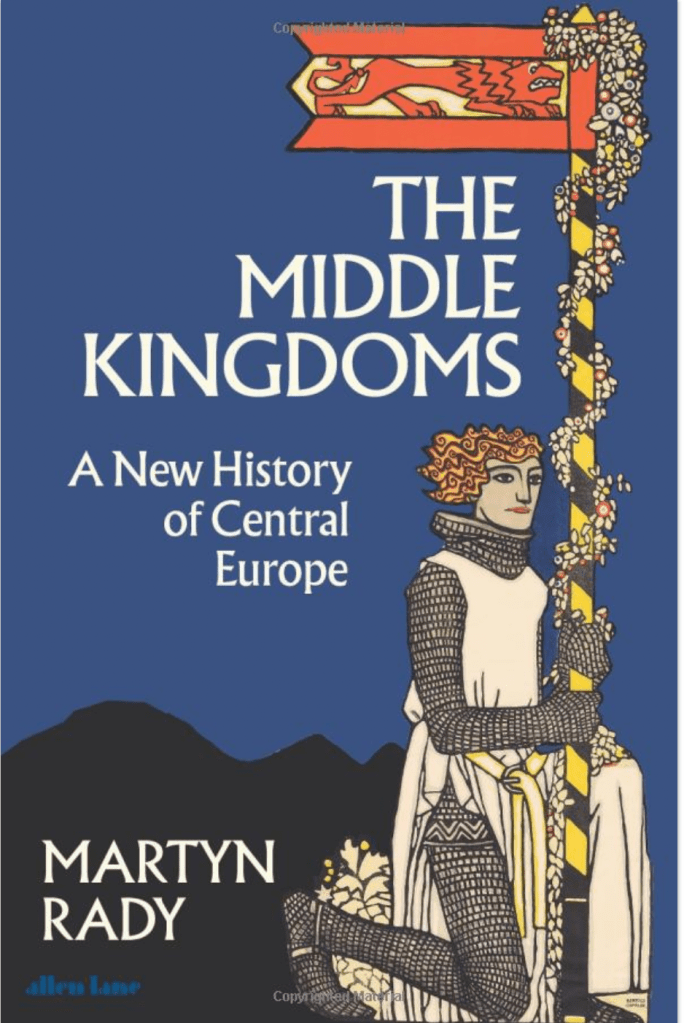
Martyn Rady , a prominent historian, in Middle Kingdom, says “ Political boundaries change, and with each alteration the idea of Central Europe changes too”. Rady highlights blending German, Polish, Hungarian and other Central European experiences and goes further west into the German speaking lands, Czechoslovakia and Switzerland, finding defining moment in the Middle Ages and the enlightenment . His central Europe is neither the universal France nor the reactionary Russia. “Central Europe was never just a reflection of Western Europe nor an appendage that uncritically copies its trends. At times it launched events most notably the Reformation which began with Martin Luther and was protected by German princes for long enough to gain a foothold across western and central Europe”. Poland adopted the first liberal constitution in Europe in May 1791, although according to some contemporary observers their economy and society as backward.
Competition among Europe’s Middle Kingdoms yielded repeated cultural effervescences. This was the first home of the High Renaissance outside Italy, the cradle of the Reformation, the starting point of the Enlightenment, Romanticism, the symphony and modern nationalism. It was a permanent battleground too for religious and political ideas.
Most recent histories of Central Europe confine themselves to the lands in between Germany and Russia, homing in on Poland, Hungary and what is now the Czech Republic. This new history embraces the whole of Central Europe, including the German lands as well as Ukraine and Switzerland/ The story of Europe’s Middle Kingdoms is a remainder of Central Europe’s precariousness, of its creativity and turbulence, and of the common cultural trends that make these lands so distinctive.
Russia’s war in Ukraine has shifted the EU’s centre of gravity to the east but also destroyed east Europeans’ unity. It has made Ukraine the new central Europe, while at the same time put the legacy of the empires at the centre of European project, although Europeans can have common dreams but their nightmares are strictly national.
Middle Kingdoms: A New History of Central Europe by Martyn Rady, Allen Lane, £35, 640 pages.
 The neptune Herald
Leave a comment