
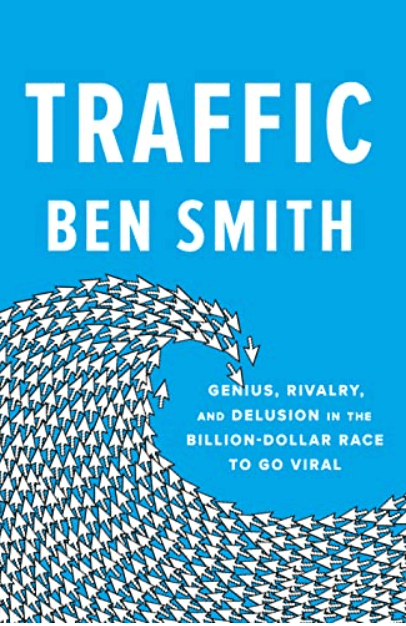
Traffic: Genius, Rivalry and Delusion is the origin story of the Age of Disinformation the candid inside tale of two online media rivals. Jonah Peretti of Huff post and Buzz Feed and Nick Denton of Gawker Media, whose delirious pursuit of attention at scale helped release the dark forces that would overtake the internet and American society.
Jonah Peretti, the original wizard of viral content and co-founder of BuzzFeed, who started out with idealism, shut its award-winning news operation last week ending a revolutionary era in digital media.
The rise and fall of BuzzFeed and Gawker Media, the pioneering group of blogs run by Nick Denton, who ensured blogs are here to stay, as both news business and politics were infiltrated by the clickbait techniques they developed. Smith recalls telling his reporters when Peretti hired him as the founding Editor of BuzzFeed News in 2011: “I didn’t want a story that did not live on Twitter.” There was no need to insist social media and the internet were the seas in which a group of hungry kids excited at the opportunity to compete with their pompus newspapers like New York Times, who were struggling to adapt to the internet and floundering financially, wanted to swim. In New York if you were turning stories into listicles for BuzzFeed or writing razoe-edged media gossip for Gawker or one of Denton’s other blogs. New York Times turned into profitable global business with subscriptions. Smith writes “Traffic was not quite like oil – a limited commodity that would hold its value”. Smith left BuzzFeed to become the media columnist of the NYT, the changed last year to co-found Semafor, another digital news start-up.
Smith concludes ” the medium could not contain the message, The Internet had become merely society itself”.
Smith traces Peretti’s days studying how to make online memes at the Massachusetts Institute of Technology’s Media Lab”. He also explains the rivalry between Peretti and Denton, a former Financial Times journalist.
The latter had felled when Gawker Media went into Chapter 11 bankruptcy in 2016 for publishing a sex tape of Terry Bollea, the wrestler (Hulk Hogan).
Smith writes “ Right-wing populism always seemed to be sitting just down the white Ikea table form this progressive internet scene , looking over its shoulder, learning its lessons”. Matt Drudge and his populist apprentice Andrew Breitbart who died in 2012, exploited traffic at the Drudge Report while Trump channelled the political power of media insurgency. Trump made his own version of reality go viral.
Ben Smith’s Traffic opens in Soho in the early 2000s, after the first dotcom crash but before Google, Apple and Facebook exploded. When it seemed that New York City rather than Silicon Valley might become tech’s centre of gravity. Within a few square blocks, Nick Denton’s merry band of nihilists at his growing Gawker empire and Jonah Peretti’s sunnier crew at HuffPost and BuzzFeed were building the foundations of viral internet media. Tech’s age of innocence; the digital news would facilitate the spread of truth. Smith as BuzzFeed’s editor-in-chief, tells a nuanced story: yes, Denton’s ideology of radical transparency was problematic, but at least he had an ideology. Jonah Peretti survived long after Denton’s Gawker perished because his focus on clicks was relentlessly content-agnostic.
Traffic explores the great ironies of our time: the Internet, which was going to help the left remake the world in its image, had become the motive force of right populism. People like Steve Bannon and Andrew Breitbart and Gavin McInnes and Chris Poole, the creator of 4Chan, all seemed like minor characters in the narrative in which Nick and Jonah and crew were the stars.
Traffic: Genius, Rivalry, and Delusion in the Billion-Dollar Race to Go Viral by Ben Smith, Penguin Press £26/ $30, 352 pages.
 The neptune Herald
Leave a comment