
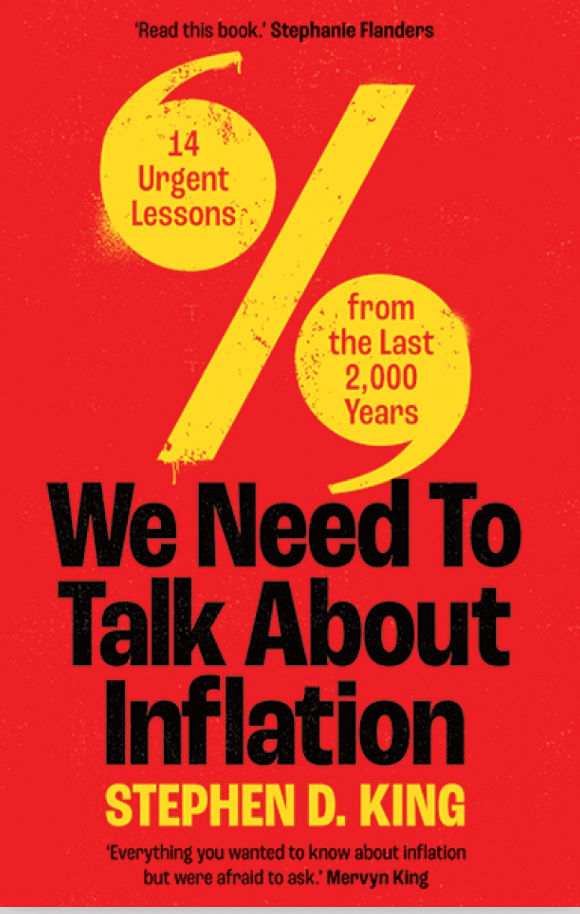
Myth-busting from investors and monetary authorities to governments and policy makers, almost everyone had assumed inflation was dead and buried. The poisonous new economic reality and the prospect of vast and increasing wealth inequality, Inflation stems from policy error, sovereign greed and a collective loss of faith in currencies. Every two generations we are destined to repeat serious policy mistakes. In Britain the Truss government failed to stem inflation and the world’s central banks too have failed to learn from the oil price shocks of 1973 and 1980.We Need to Talk about Inflation offers an instructive lessons from economic history, as inflation penalises thrift and rewards profligacy and makes planning difficult.
King scans through 2, 000 years of inflationary history from Emperor Diocletian’s debasement of the coinage through to the Federal Reserve’s decision in 2021 to allow inflation to run at above 2 per cent “central target” is instructive. Print too much money and inflation generally follows. Confidence in currency matters, if you lose it and trust in institutions diminishes, examples of Argentina and Brazil is quite clear in mind.
During the 19th century the high water mark of gold standard, the purchasing power of Sterling increased by 48 per cent. During the 20th century when both the gold standard and the post-1945 Breton Woods System of fixed exchange rate collapsed, Sterling purchasing power fell by 98 per cent.
When inflation is rising governments invariably blame external factors, supply chain problems arising from the pandemic, and the energy price increases generated by the war in Ukraine, have been a instrumental in the recent upsurge in inflation.
King argues that central banks’ bias against deflation during the past decade may have created a bias in favour of inflation. By distorting the bond market, quantitative easing removed a key early warning indicator available to central banks to gauge inflationary risks. The signs of monetary excess that indicate heightened inflationary risk and also rate of U monetary expansion during the pandemic.
Inflationary risks trivalised or excuse. In UK it took two and half years for the annual rate of UK inflation to rise from 0.3 per cent to 10 per cent.
Although supply chain problems of the pandemic recedes, trade barriers often missold as greater national resilience remain on the increase.
Inflation cuts through centuries of bad judgement and misunderstanding offering a means to intervene now- so we can begin to tackle the political and social upheaval unleashed by inflation.
We Need to Talk About Inflation: 14 Urgent Lessons from the Last 2, 000 Years by Stephen D. King, Yale £20, 224 pages
 The neptune Herald
Leave a comment