
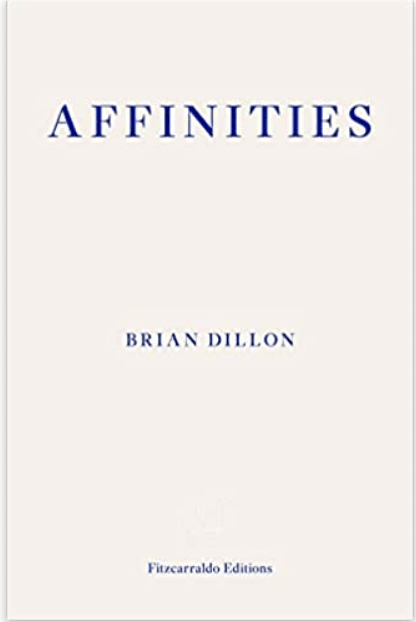
Affinity is a critical and personal study of a sensation that is not exactly taste, desire, or allyship, but has aspects of all. Approaching the subject via discrete examples, Affinity is first of all about images that have stayed with Irish critic, essayist and memoiris, Brian Dhillon over many years, or grown in significance during months of pandemic isolation,, when the visual field had shrunk. He delivered a paper on “photographic moments” in literature. A young colleague’s response: “This was all very well but seemed to consist only of connections”, where, he asked , was the argument?
Dillion spotted, teased out and enjoyed the way this or that image or book speaks to another through time, rather than proposing an immovable thesis.
In Affinity Dhillon not only connected and a distinct influence like a chemical relationship signifying one element’s capacity to displace another.
Some historical works by artists such as Julia Margaret Cameron, Dora Maar, Claude Cahun, Samuel Beckett, and Andy Warhol. Others are scientific or vernacular images”: sea creatures, migraine auras, astronomical of illustrations derived from dreams, Also family photographs, film stills, records of atomic ruin. And Contemporary art by Rinko Kawauchi, Susan Hiller and John Stezaker.
Each image, each passage speaks to the next. The jagged aura from Airy’s illustration seems to appear again in a flickering still from an Andy Warhol video of Edge Sedgwick. The fin-de-sie-cel dancer Loie Fuller performed as the element radium, then gave a 1911 lecture about the element’s magical potential to “photograph our imagination”.
The careers of photographers including Julia Margaret, Cameron, Dora Maar and Francesca Woodman are examined.
Affinities by Brian Dillon, Fitzcarraldo £13.99 320 pages
 The neptune Herald
Leave a comment