

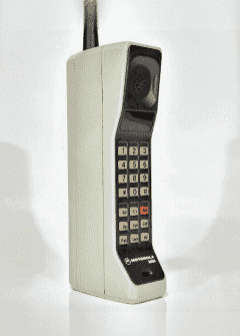
On April 3, 1973, 94-year-old cellphone creator, American engineer, and founder and CEO of ArrayComm, a wireless communication software company founded in San Jose, California, who led the team that in 1972-73 built the first mobile cell phone and made the first cell phone call. He graduated from the Illinois Institute of Technology (IIT) in Chicago with a bachelor’s degree in electrical engineering in 1950. He joined the US Navy and served during the Korean War. He then joined the Teletype Corporation, and in 1954, began working at Motorola. He earned his master’s in electrical engineering from IIT (1957), and was involved in projects like the first radio-controlled traffic-light system, which he patented in 1960, and the first handheld police radios, which was introduced in 1967. Mobile phones has been introduced by the American Telephone & Telegraph Company (AT&T) in 1946,. However, in a given area only 11 or 12 channels were available, so users often had to wait to use the system. Another weakness of the first mobile phone was that the large amount of power needed to run them could be supplied only by car batteries. Thus these phones were not truly portable phones, but only car phones. Engineers, W. Rae Young and Douglas H. Ring of AT&T Bell Laboratories, showed in 1947, that more mobile users could be added by breaking down a large area into many smaller cells but that required more frequency coverage than was then available. However, in 1968, the US Federal Communications Commission (FCC) asked AT&T for a plan for employing a little-used portion of the UHF television band. Motorola did not want AT&T to have a monopoly on cellphones and feared end of its mobile business and Cooper was placed in charge of the urgent project to develop a cell phone, who invented DynaTAC ( Dynamic Adaptive Total Area Coverage) phone, which was 23 cm ( 9”), tall and weighed 1.1kg (2.4pounds) and allowed 35 minutes of talk on full battery charge, which was introduced on 3 April 1973. He placed his first public cell phone call, to engineer, Joel Engel, head of AT&T’s rival project, and gloated that he was calling from a mobile cellular phone, before the press conference.
A Microchip in the phone modulates a radio wave using the electric signal. The radio wave travels through the air to a nearby cell tower, which sends your voice to the person you are calling and the process is reversed so that the person on the other end can hear your voice.
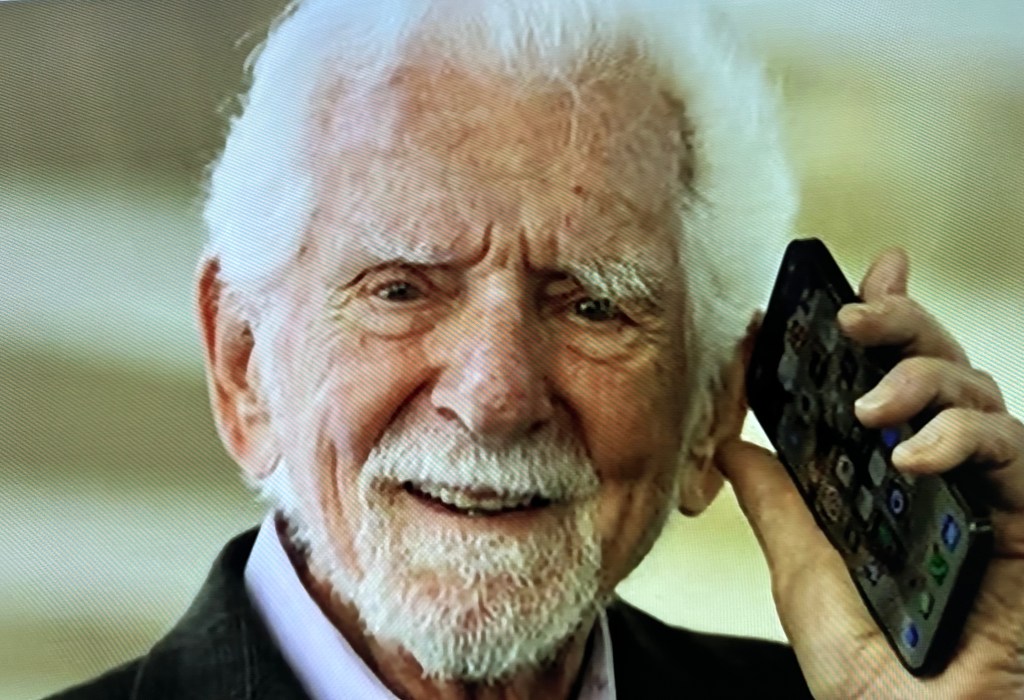
Martin Cooper, now uses latest iPhone and gives it a thorough road test, and uses mostly to speak to people, check email and photos, watch YouTube, and control his hearing aid. The inventor also wears Apple Watch.
Cooper talked about the problems of new are mobile phones and feels a bit much with several million apps available saying “I’ll never, ever understand how to use the cell phone the way my grandchildren and great grandchildren do”. Cooper also said “ I am devastated when I see somebody cross the street and looking at their cell pone. They are out of their minds. But after a few people get run over by cars, they ‘ll figure it out” he said jokingly. He also talked about the potential of smartphones saying that the “neat little device we all have in our pockets” has the potential to even help conquer disease one day and be a life saver. “The cell phone has now become an extension of the person; it can do so many more things. And in that regard, we are just at the very beginning, We’re just starting to understand what that could do in the future., we can expect the cell phone to revolutionise education, it will revolutionise healthcare. I know that sounds like an exaggeration, but I want you to know within a generation or two, we are going to conquer disease”. He further said that Just like the watch monitors his heart rate while he swims and his phone monitors his hearing aids, phones will one day be connected to an array of bodily sensors that will catch illness before it develops”.
 The neptune Herald
Leave a comment