
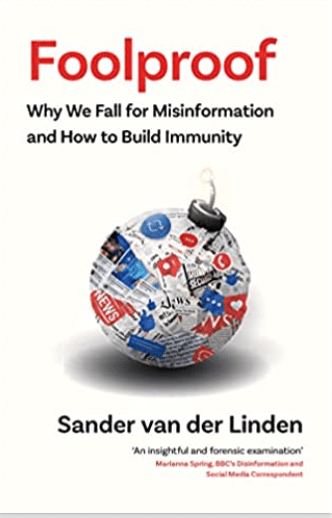
From fake news to conspiracy theories , from pandemics to politics, misinformation may be the defining problem of our era. Like a virus, misinformation infects our minds -altering our beliefs and replicating at astonishing rates. Once the virus takes hold, our primary strategies of fact-checking and debunking are an insufficient cure. There are plenty of people trying to fool us these days and plenty of people happy to be fooled. Professor of psychology at Cambridge, Sander van der Linden, has been studying why are we susceptible to misinformation for years, and promises to build immunity to misinformation. Linden describes how to inoculate yourself and others against the spread of misinformation, discern fact from fiction and push back against methods of mass persuasion.
Consider also the illusionary truth effect, discovered in the 1970s, if you ask people to evaluate the truth or falsehood of a series of statements such as potassium is the lightest of all metals, or Lake superior is the largest lake in the world, then they are more likely to rate statements as true if they have seen them before, as familiar statements feel true. The illusionary truth effect is an instructive example of the perils of fighting misinformation. It is far easy for journalists, educators and fact checkers to amplify and reinforce falsehoods while attempting to debunk them. ” Identity protective cognition” where we place a higher value on defending our place in social group than on discovering the truth and nano targeted dark posts, where some political campaign uses your psychological profile to show you a Facebook advert designed for you and you alone.
The 2021 attack on the United States Capitol, which sought to challenge Joe Biden’s presidential victory, is a chilling reminder of the damage that a misinformed crowd can inflict. The false claim from former President Donald Trump that Democrats had stolen the election by committing widespread voter fraud, was frequently repeated on social media and conservative cable news. Trump has made over 30, 000 false or misleading claims during his presidency. The violent riots at the Capitol may not have been a consequence of misinformation alone, but an extensive investigation by the independent fact-cheeker PolitiFact, who reviewed the files of over 400 of those arrested, showed that in at least half of the cases, misinformation shaped the defendant’s beliefs and actions. Many of those arrested had been highly active on social media: several even cited being “duped by fake news” as a defence in court.
In April 2018, false videos with warnings of local child-traffickers in Tamil Nadu, southern India circulated on WhatsApp, claiming that more than fifty children had been abducted in the area. These messaged incited a mob of around 200 people to attack an innocent family, dragging them from their care and beating Rukmani to death and leaving others critically injured, known as Indian WhatsApp Lynchings”. The messages triggered a spate of similar assaults.
In early 2020 in Iran, hundreds of deaths, and thousands of hospitalization _ including children – were attributed to mass poisonings, after people were fooled by false social media claims that ingesting toxic alcohol-based products could help neutralize the coronavirus. In short fake news can get you killed.
Foolproof: Why We fall for Misinformation and How to Build Immunity by Sander van der Linden, Fourth Estate £22, 336 pages.
 The neptune Herald
Leave a comment