

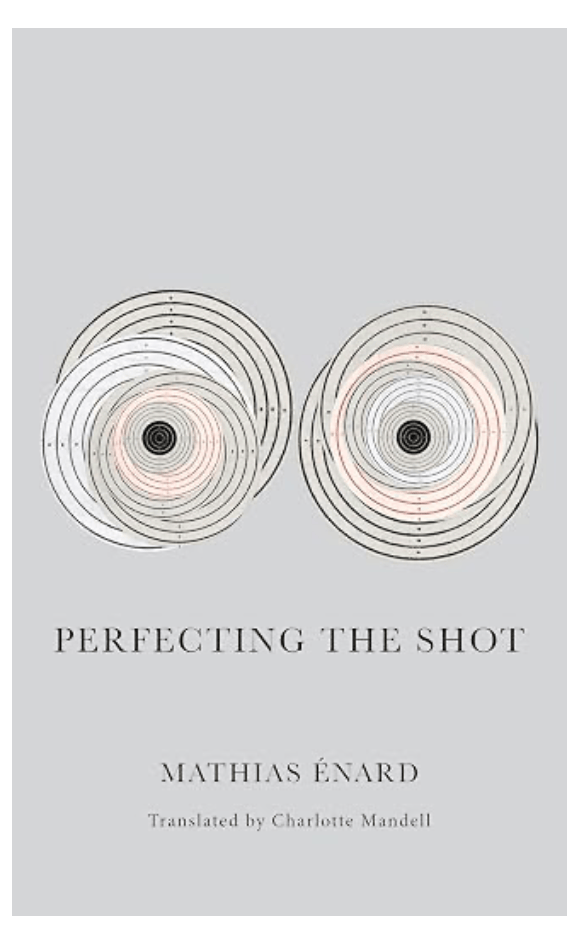
Mathias Énard’s first novel, revolves around an unnamed city completely torn apart by civil war, a teenage sniper has only one goal: to fire the perfect shot. He sublimates himself into his weapon, controls his breath, stays serenely calm, and listen to his body and the beat of his heart. Lying in wait on rooftops, he shoots at civilians amid the movement of seagulls in the dawn sky. At dawn he finds that the light is perfect- not too blinding, no reflections- and people are less careful.
In one scene, he is soothed by the sight of a woman falling “like a marionette with its strings cut” when his bullet hits her. Shooting is “so simple, control of the breath, the result of the shot, certainties, surethings. War and conflict are a common thread in the oeuvre of Énard, the French novelist who won the Prix Goncourt for 2015’s Compass. His earlier work Zone, an amphetamine-fuelled stream of consciousness written as a single-sentence, tracing the violent and entangled histories of the Mediterranean. In springtime but you did not imagine the definitive transformation that was about to occur. While he believes that his work as a snipe is useful for demoralising the “enemy”, he also shoots for his own gratification, drawing solace from the simplicity of the “artform”. The protagonist’s mentally ill, mother- both characters are unnamed beings to lose her mind, walking on to their balcony naked, refusing to wash for feat of water and obsessively tracing the patterns of tiles for hours at a time. To care for her, he employs 15-year old Myrna, whose father has been killed by a shell. Before long, the protagonist discovers a talent for killing people. But the violence eats away at any sense of morality as he kills indiscriminately, for the sake of killing itself. His routine is eventually disrupted by his increasingly disturbing obsession with Myrna threatens to push them all over the brink. He begins to watch her, “motionless as a guardian angel”, as she sleeps. Before long, he is dreaming of raping her and of killing her when she resists. This Kaleidoscope of desires- sexual, violent- makes him feverish, ; “Cold liquid stars streamed on my back… I wanted to fill my senses with detonations, volleys. I want my wrist to leap like an eel to the to-and-fro rhythm of the breech. I wanted my eyes to see one last time the magic of projectile, the brief unreal sincere flame.” Myrna vanishes, having fled back to her village, and the war moves to the mountains. There are graphic descriptions of civilian rape and eviscerated corpses; a man lies in a “bloody heap on a stretcher, like a crushed toad”.
In his more lucid moments, the sniper reflects on the senselessness of it all- skirmishes are just a way to pass the time, “like doing homework on holiday”- and aching tedium of war. This unrelenting book, whose harrowing urgency belies its piercing lyricism, exposes the disastrous effects of extreme violence on society. Énrad’s contradictions, tenderness and cold vengeance with painstaking details about rocket-propelled grenades, mortars and shell calibre, as the sniper out of woods and back on the hunt for Myrna. “I feel the breath of violence pushing me towards the abyss, like a boat to the edge of the world, and I can’t regret anything or feel anything. I will go to the end, I will do what I have to do”, protagonist says.
Perfecting The Shot by Mathais Énard, translate by Charlotte Mandell, Fitzcarraldo £12.99/ New Directions $17.95, 172 pages.

