

Being successful in Milwaukee, the leading academy for future captains of industry just isn’t the same”, according a Harvard administrator in the mid 1980s. But by late 1980s, most MBA graduates were going tyo Cincinnati or Connecticut.
Young Urban Professional or Yuppies a term originated in the 1980s about successful young affluent arrogant professionals often associated with industries such as finance, technology and the arts in large urban cities with their lifestyle and consumerism.
As Wall Street moved to the centre of American life, it drew a generation of young professionals into its vortex. For the first time, banks recruited roughly one third of graduating classes from top universities.
American’s economy had a new main character. Young bankers extracted profits from waning industries, shattering the foundations on which stable middle-class employment had long rested. Yuppie lawyers devised deals and tax strategies that eroded power and wages. As consumers, yuppies created new cultures of fitness and of excess, popularizing marathon running and fine dining as status markers. As city-dwellers they were pioneers of gentrification. As voters and political donors, yuppies engineered a takeover of local and national government, using their wealth to back candidates hwo would remake the country their image.
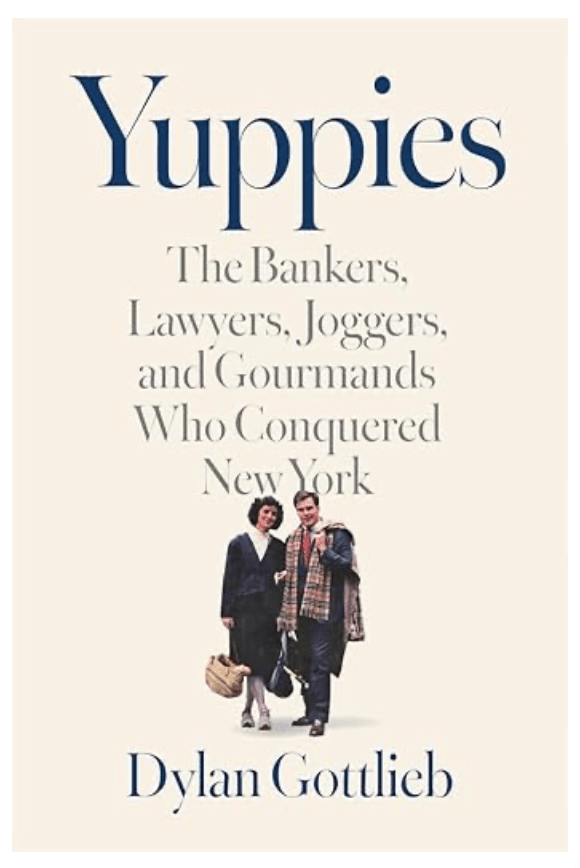
Dylan Gottlieb, historian from Massachusetts’ Bentley University, writes a new clinical anthropology and about the evolution of American high finance, and consequences of financialisation to New York city, as the Regan-era ushered in a new era of Darwinian capitalism – highlighting hostile take-overs, corporate raiders, shareholder value maximisation – which required an army of workers, Ivy League under-graduate classes, as well as MBA students and law students suddenly were needed to process the mergers and acquisitions boom through 100-hour workweeks.
“As taste cultures evolved ever faster, yuppies had the semiotic skills and disposable income to continually reinvent consumer choices” Gottlieb writes, and tells his story through primary sources like college newspaper clippings, career centre reports.
Unlike WASP nepo babies and more strivers of Jewish, Indian or Chinese or black or Latino descent and increasingly women who seemingly succeeded through industriousness rather than social class. Yuppies reshaped New York with coffee shops, galleries and restaurants catering to their tastes. Gottlieb explain the success of Zagat restaurant guidebook, started by two former corporate lawyers who realised that their classmate were obsessed with rankings and eager to foot the pricey bills to tick off as many five-star boxes as they could. Yuppies changed the political map by marrying their social liberalism with market-oriented economics, shifting Democratic Party away from its historic labour orientation.
Gottileb writes about US Senator Gary Hart whose presidential runs were primarily to attract Wall Street money for Democrats and whose rising star with eventual elections financier favourites Bill Clinton and Barack Obama.
Gottlieb also feature the decade’s most sensational crime even featured a yuppie – the Central Park jogger attacked and left for dead in April 1989 was a 29-year-old woman with degree from Yale and Wellesley College who worked as a Salomon Brothers bond trader.
Gottlieb writes “ We can move toward a world where we shun internecine competition for dominance and distinction where smart young people have choices beyond heeding the whims of Wall Street.”
Yuppies: The Bankers, Lawyers, Joggers and Gourmands Who linguicide Conquered New York by Dylan Gottieb, Harvard £26.95/$32, 352 pages.

