

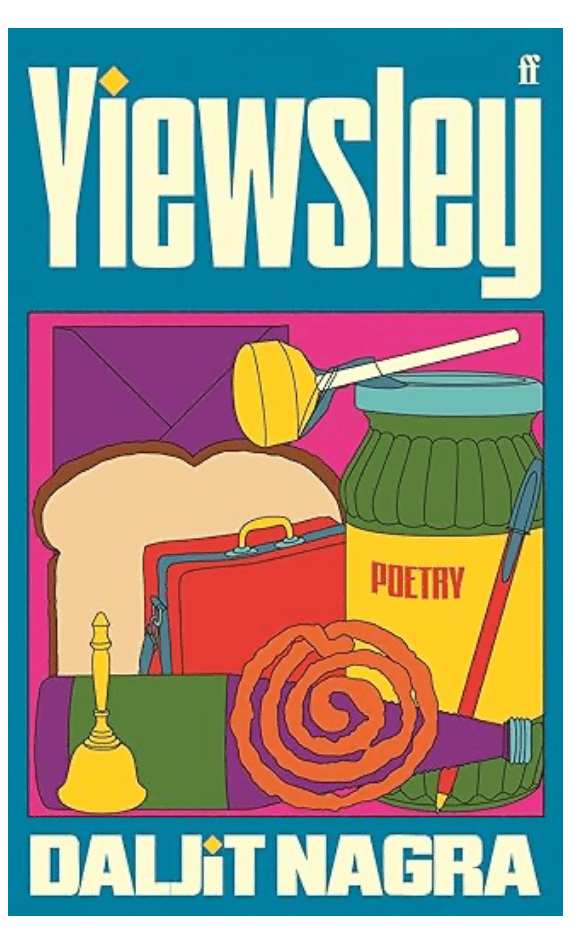
Yiewsley exposes Daljit Nagra’s experiences growing up as the son of immigrants in the white, working-class suburban town of Yiewsley close to Heathrow airport in outer London, from the 1960s to 80s, as Britain transitions from a post-war manufacturing economy to the Thatcher period and the computer age, we see a young boy navigating childhood friendships and mishaps. The poems being to life a bustling house filled with relatives from India who arrived, legally or otherwise, in the UK: “Devout realists-already, and always, knuckled into work”. They also offer powerful insight into the makings of the writer: the “messy English” at home fusing with Bollywood ballads, Top of the Pops and hymns at school, to develop a voice entirely his own. The long poem “versed” describes his key poetic discovery that by jumbling the syntax on an oscillating tone, you could really hear it- the vocals of your Punjabi compounded in English”.
Nagra writes “the greengrocer has harvest rows of marrows, turnips and squash gaudy as the Golden Temple and sprouts all year round. a Wimpy with burgers pushed down by a spatula on the hot sticky griddle, knickerbocker glory the gloriest words you’d ever supped, the pet shop with the tortoise who shuffles on sawdust to crouched -kiddle cooing while an iguana looks on from a shelf, your town of Teddy boys and Tammy feels a rainbow away from the birth of the cappuccino, the national curriculum, Pac-man and Amstrad.” Nagra’s curiosity and radically inventive use of English language, brings the period alive in poetry.
Yiewsley By Daljit Nagra, Faber & Faber £14.99, 96 pages


At first glance at this writing about the book it seems it is a “feelgood factor” type of “diary” which would be nice and entertaining to read. It does not refer to racism or abusive treatment but humourously refers to a situation where people come into the country with or without the correct documents and this is in the past but relevant to current times also. It might prove educational and fun to younger readers as well as other ages to see how the experience of the writer compares to current times. There’s only one way to find out and that is to read and ENJOY!
LikeLike