

Why Democracy Need the Rich, by John O McGinnis, a professor of law at Northwestern University, reminds us the integral role the upper classes play in US democracy. He makes a wide-ranging and convincing case, countering views such as “every billionaire is a policy failure”, by spotlighting the vast contributions of the rich to charity, civic associations and universities.
Why Democracy Needs the Rich challenges the prevailing belief that wealth undermines democracy, offering instead a bracing, thought-provoking claim that the rich play an essential role in sustaining and improving democratic institutions. At a moment when billionaires are often vilified as symbols of inequality and unchecked power, John O McGinnis reframes the debate, arguing that the wealthy are not just vital contributors to innovation and economic growth but also indispensable counterbalances to the power of journalists, academics, and entertainers, who shape opinion and policy without facing the voters.
Drawing on history, economics, and political philosophy McGinnis illustrates how the rich stabilizes democracies by funding civic institutions, championing diverse ideas, and driving the technological progress that itself prevents entrencher gatekeepers from monopolising the public square. He reveals how wealth can act as a check on the power of special interests and bureaucracies.
With sharp analysis and compelling examples, he explores the distinct role of the wealthy in preserving the balance and dynamism of a free society, highlighting how their financial independence fosters ideological diversity and their investments fuel innovations that benefit citizens at all socioeconomic levels. Far from defending in equality, his book paints a clear-eyed argument for how wealth, under the proper constraints, strengthens the foundations of representative democracy and fosters a more resilient prosperous society.
The gap between the rich and rest feels it is getting wider.
Why Democracy needs the Rich: The Hidden Benefits of Wealth in a Free Society by John O McGinnis, Encounter Books £23.99,/ $32.99.
Self-conscious prose that is at once propulsive, titillating and bitingly funny
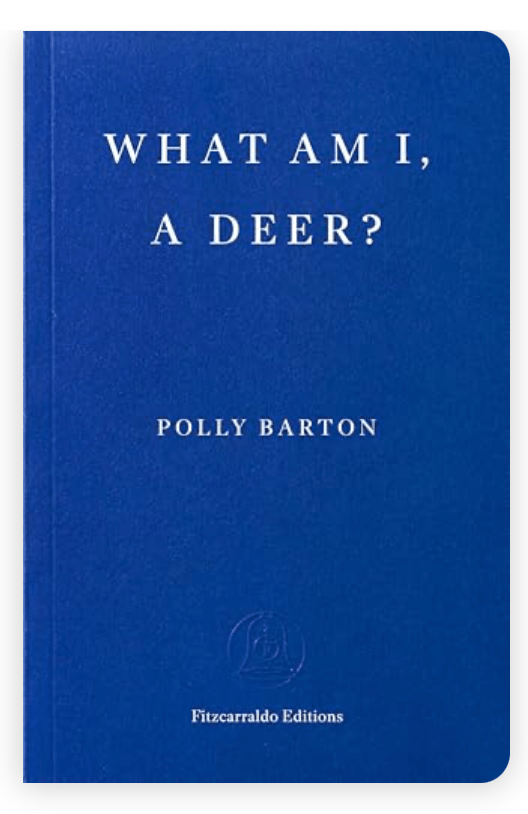
Polly Barton, an essayist, oral historian and International Booker-longlisted translator, in What Am I, The Deer, reveals a obsessive fantasy, and a love letter to the sacred practice of karaoke. Its unnamed protagonist is a British woman reflecting on a time in her twenties when she worked as a translator of Japanese at a Frankfurt games company. For her karaoke represents a mode of performativity that is free of judgement, which allows her to feel “that you weren’t pinned down to any particular identity, because here was the multitude , here was everything, here was all future happiness”.
What does it mean to lose yourself- and is that something you should be aiming for? On her morning commute, in the familiar clutches of tedium and self-loathing , she encounters a nice-eyed stranger on the tram to work, who returns her forgotten umbrella, she has left on the seat and finds herself catapulted into a dizzying year-long whirlwind of obsession- not just with this endlessly attractive spectre, but also with the feverish karaoke trips from which she draws the ultimate solace. She follows him off the tram, finds that he too works for the games company on a different floor, and begins a silent “programme of pursuit”. While the umbrella man dominates her thoughts, she begins a lukewarm and eventually toxic relationship with another unnamed colleague, “stylish man”, and settles into the city. She also lingers on her family background, particularly the fact that her grandmother was an Austrian Jew who fled persecution to the UK. She recognises this as an unexamined part of her psychology but, while she begins learning German as she doesn’t really unpack tis history.. Karaoke also works in relation to the novel’s other highly symbolic activities: translation and gaming. Karaoke and translation both involve “inhabiting something fully without committing to that thing, living in the luxurious promise and possibility of it and not the isolated consequence-laden reality”. Yet it is gaming and game logic that offer more critical lines of sight. In What Am I, A Deer, the episodes, themes and recursions crystallise into layers of insight on the hope and fantasies that drive people into action.
With astonishing existential acuity, Polly Barton’s formidable debut novel renders the paradoxes of modern life in all its complexity, in deliriously self-conscious prose that is once propulsive, titillating and bitingly funny. Echoing with the sounds of Whitney Houston and The Cure, reaching for the sublime in dark, sweaty boxes, What Am I, a Deer? Is an exhilarating exploration of authenticity, fantasy, romance and intoxication.
What Am I, A Deer? By Polly Barton, Fitzcarraldo Editions £14.99, 248 pages.

