

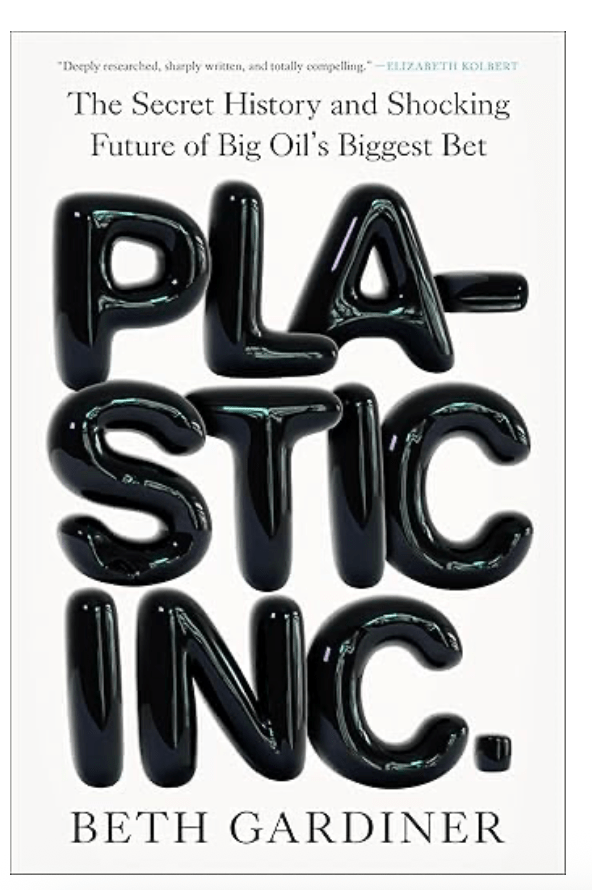
A compelling exposé of the industry flooding our world with plastic, the fundamental material for modern consumerism, spanning our daily lives. Although the oil and petrochemical companies making it are hiding in plain sight. Because for all the vivid coverage of where plastic ends up, there is remarkably little discussion of where it comes from. Today, industry is pouring billions of dollars into plans to double, or even triple, the amount it churns out, even as individuals concerned about plastic’s out-of-control proliferation try to use less. As Big Oil shares down a future of diminishing demand for fossil fuels, plastic has become its financial lifeline.
Beth Gardner, Award-winning journalist, gives readers an up-close look at the plastic industry’s relentless growth, its extraordinary profits, its toxic pollution and its hidden role in exacerbating climate change. Plastic Inc. brings new revelations, including how Big Oil pushed the lie that recycling was the answer to our plastic mess, even though companies always knew it couldn’t work at scale, the hidden health crisis caused by chemicals and microplastics in the items we use every day, and the alarming parallels betweenthe marketing strategies used by plastic producers and those of tobacco companies and Big Pharma.
Plastic Inc’s revealing stories will reframe or readers a problem many of us think we understand, but which has deeper roots, and greater dangers, than we know.
Since highly adaptable and robust plastic was discovered almost by accident, from waste derived from fossil fuels common plastics have all but conquered the planet. Microplastics are in our bodies, in foods, soils, trees and air, wreaking havoc and even leathal harm on nature and wildlife.
Fossil fuel companies kept quiet about the future impact of their business on climate, so too they kept research about any harms caused by plastics to themselves. Gardiner recounts industry debts in the 1960s over how to wean the post war generation off reuse and frugality and teach customers how to waste. Plastic industry countered opposition by promoting the concept of recycling, as they shifted the responsibility of dealing with rubbish appropriately to the consumer, so that the industry was largely off the hook.
In Britain, Australia, and France, Gardiner writes, Industry ploughed money into anti-litter groups. Keep America beautiful campaign was not founded by the government or a civic-minded institution but by manufacturers. In 1970s a Native American suffering the careless despoilment of nature –“People start pollution: Pople can stop it”, ran the catchline, the ad, sponsored by some of America’s biggest manufacturers including Coca-Cola, Pepsi, Philip Morris Tobacco and the American Can Company, achieved a record viewer recognition levels and played an important part in turning a systemic problem into a personal one.
The Fast-fashion giant Shein produces more than one million different designs a year, manufactured from fossil fuel derived polyester, destined for one or two wears before the bin, More than 500 bn plastic water bottles are used a year. One to five trillion plastic bags are manufactured every year, with their average use being calculated at between 12 and 15 minutes. Today polyethylene is the world’s most common form of plastic, consuming a significant and growing amount of all fossil fuels. As renewable energy soars, oil companies are increasingly looking to plastic to support continued production rises.
France has banned school uniforms containing the chemical PFAS, found in polyester. The EU wants to ban PFAS from all fabrics. The UK has introduced a law extending the responsibility of producers for the disposal of packaging. As science delves into the physical impacts of microplastics are having on our bodies, the time for global rethink must be surely overdue.
Plastic Inc.: Big Oil, Big Money and the Plan to Thrash our Future by Beth Gardiner, Monoray £22/Avery $32, 352 pages.
 The neptune Herald