

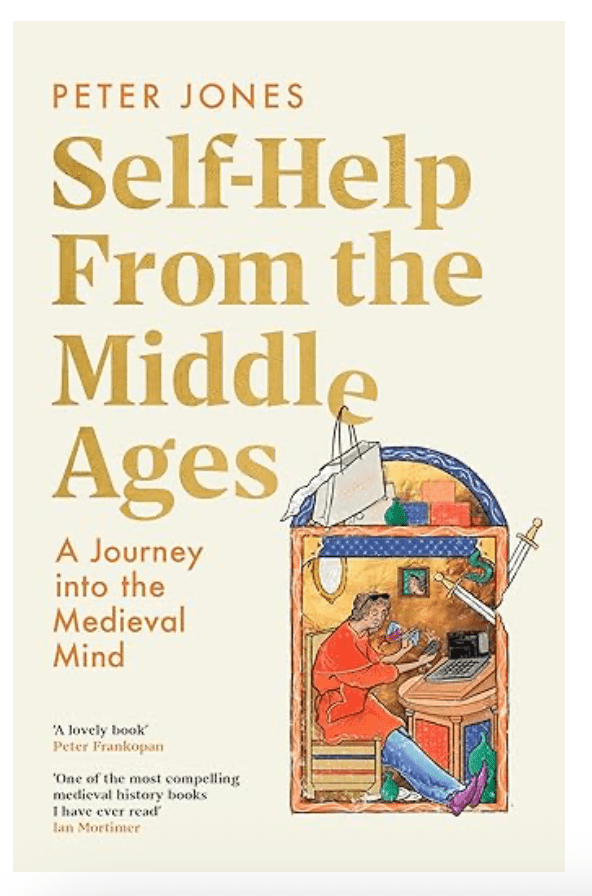
Historian Peter Jones travels through Europe’s archives and libraries to uncover a lost psychology: a world where confession was therapy, sin was diagnosis, and the Seven Deadly Sins served as a man of the human mind.
What can Twelfth-century monk teach us about burnout, envy or despair?
From the deserts of Egypt to the Vatican Library, from Dante’s Florence to Catherine of Siena’s cell, Jones introduces the thinkers, mystics and rebels who wrestled with the same questions that preoccupy us now: How to live with our flaws, forgive ourselves, and find meaning amid confusion.
Medieval lives and landscapes come vividly alive: Siberian winters and Parisian manuscripts, lustful saints and anxious scholars, candlelit abbeys and vaults of forgotten books. Wise, surprising, and deeply humane, Self-Help from the Middle Ages reveals that the remedies we seek for out 21st-century anxieties may have been with us all along- written in brown Gothic ink on lambskin seven hundred years ago.
How to cure your lust, gluttony and avarice, pride, anger, envy, and sloth.
When we find ourselves unexpectedly aroused, infuriated or jealous, it is often because, as we still say, the balance of our minds is disturbed. In such moments, turning to a clear checklist of these aberrations offers an excellent way back to equilibrium.
In the drawer marked Anger, we find the beguiling Old Testament figure of Judith, driven to fury because her besieged city is about to fall to the despotic and savage Holofernes. Doffing her widow’s weeds, she arrays herself in finery, makes for the Assyrian camp, seduces Holofernes and when he falls into a drunken stupor- cuts off his head.
From each sin there is a matching range of remedies to ensure it is nipped in the bud. Unchecked, Envy might develop from innocent daydreaming into dangerous paranoia, while pride can lead via minor sumptuary vanities to delusions of omnipotence.
There is sympathy and a profound generosity at work here. Sloth, is seen as the unavoidable effect of trauma or grief, a depression or paralysis of the heart. Punishment is no solution: It is only gently to be overcome by learning to love again- although Medieval doctors also made widespread use of a tranquiliser called Theriac, a decoction of viper’s flesh, honey and distilled lilies.
Gluttony there a six levels of Medieval drunkenness: “By the calculations of the historian Richard Unger the average English person drank around seven pints of beer every day,” Jones writes. When it comes to lust even Bernard of Clairvaux alongside Catherine fo Siena, Farncis of Assisi and Thomas Aquinas has some surprisingly realistic theories.
Self-Help from the Middle Ages: A Journey into the Medieval Mind by Peter Jones, Hutchinson Heinemann £20/Double Day $30, 368 pages.
 The neptune Herald