

Rev Dr Howard Worsley is a researcher, teacher and priest. With an English degree from Manchester, he pursued an MA in Theology at Nottingham, then a PHD in Education at Birmingham. This busy man is currently working as the Diocesan Director of Education for Southwell and Nottingham, as well as being the Chair of the National Association of Church Directors. He has 3 sons, and loves exploring the world by canoe, bike or foot. In this book, he intends to uncover original visions seen by children which is sometimes termed “Spiritual Reality”.
To create this book, thirty families were selected after advertisements were featured inviting parents who read the Bible to their children to get in touch. Different types of Bible story were selected and parents or grandparents were given careful instructions on how to tell the stories and to record their child or childrens’ responses; the best of which are contained in this volume.
Chapter two – Texts of Adventure and Leadership, covers David and the Mighty Men (2 Samuel 23 v 13-17), told by a mother to her 5 year old son. The young boy asked to read it himself and wanted to know more detailed information on it. The writer comments that the engagement of such a young boy with this text is quite startling. The Fall of Jericho (Joshua 2 v 1-24 & 6 v 1-27) was told by a mother to a 7 year old daughter. This very negative story elicited concerned questions from the daughter, including “Do you actually think this story is true?”, with the mother’s reply: “Well, the Bible means “a library” and it holds a lot of books. Some of these books are stories and some are historical accounts”. The mother’s reaction reflected on how she thinks children perceive the world today, being that her daughter had only focused on the death of the inhabitants of Jericho and not on the leadership of Joshua. When the same story was told by another mother to her ten year old daughter the youngster concluded that God is Good because he got rid of bad people. This, observes the writer, is perhaps because the child is at a stage of moral reasoning which is concrete and literal and which has no space for ambiguity, whereby the clear line of truth must be maintained at all costs.
In Chapter 6 (the book has 8 chapters), Texts of Comedy are featured. The Unjust Judge (Luke 18 v 1-8) was told by a mother to a five year old daughter, the mother saying it took her several readings before the session before she was clear in her mind about what she thought it was saying. The reaction of the daughter was to wonder why the man wouldn’t listen to the woman in the story, and to be slightly displeased that men in high positions might be like that nowadays. The mother underlines to her daughter, “their job is to do what is right and make good judgements, like God”. The same story was read by a father to a ten year old son and an eight year old daughter. Their reactions were analysed as belonging to “Key stage two, aged 7-11”, which has been called by some as “The age of the young scientist”, in that it is a time when things are either right or wrong. It is also a period of considerable spiritual awareness.
In conclusion, the writer recalls, on his research, the Christian Messiah’s comment when he chided his adult followers, “Unless you become like a child, you will not enter the Kingdom of God”. There are two appendices, and a summary of the projects together with the index at the end of the book.
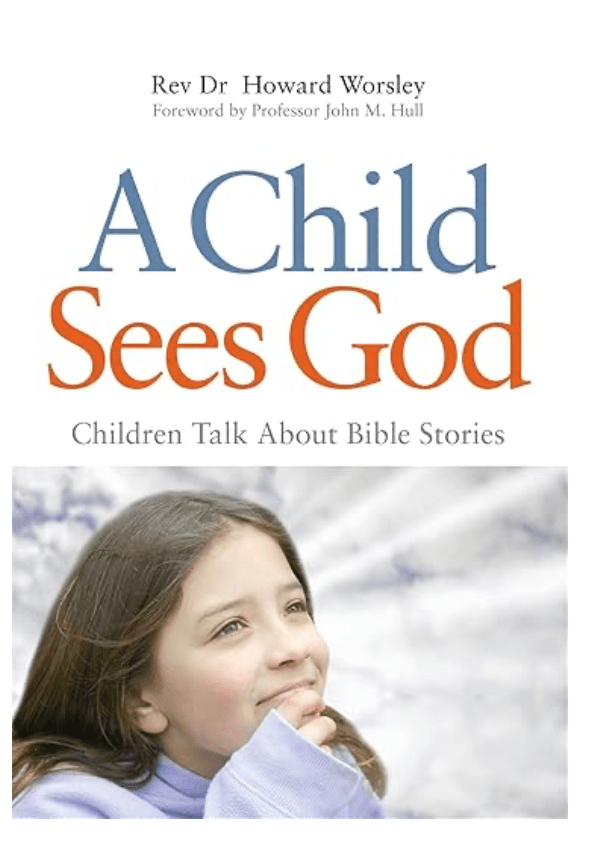
“A Child Sees God” – Children talk about Bible stories. Reverend Dr Howard Worsley. Jessica Kingsley Publishers. ISBN 978-1-84310-972-3 £14.99.
Penny Nair Price
 The neptune Herald