

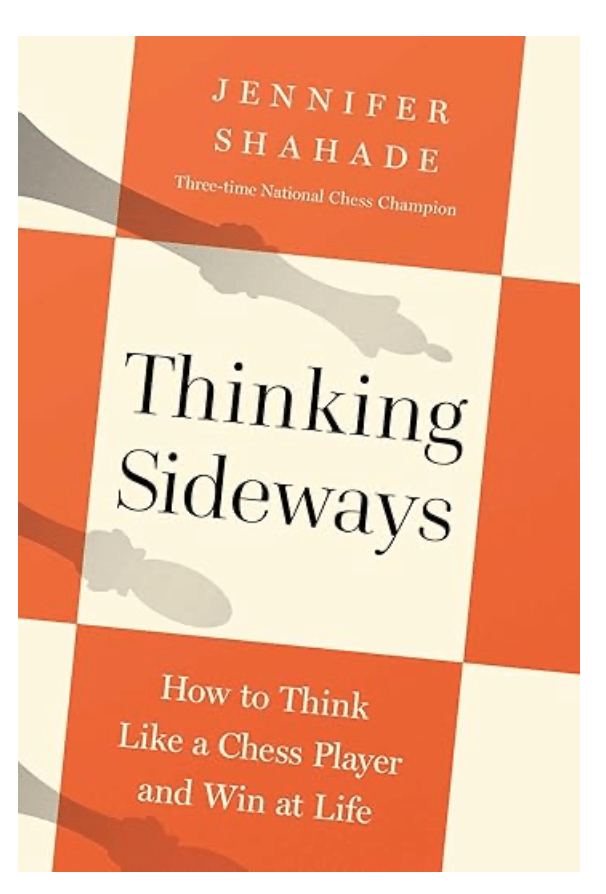
Chess is the art of the possible, as there are more possible chess moves than atoms in the universe. Essential life lessons from the world of chess so that making smarter choices to building focus and confidence from Jennifer Shahade, a former two-time chess U.S. Champion and professional poker player. Chess players are experts in considering their options, allowing them to seize an opportunity idea, or move that no one else saw. In today’s hyper competitive world, thinking sideways can help you win at life.
Shahade reveals you don’t have to be a great chess player to think more like a chess player. From building mind palaces to crafting decision trees, she shows us the most useful strategies from the ancient game that we can use in our daily lives. Drawing from examples from business, sports, and psychology, as well as her own experiences touring the world as a chess and poke player, Shahade transforms of what success looks like, and how to achieve it for ourselves.
Shahade insists it is a “magical phrase”, merging creative thinking with analysis or where logic meets imagination. Shahade sifts through a loose pile of behaviourial economics, game theory, wellness advice, personal experience, conversations with friends, pop psychology, and several other books about psychology, with decision-making and her main weapon is the decision tree branching possibilities in a chess game. In one section, US senator Cory Booker, performance artist Marina Abrahamovic, magician David Blaine, YouTuber Mr Beast, World Chess No 1 Magnus Carlsen, the Whitney Museum, heat absorption, Shakespeare’s Macbeth, a Siberian labour camp. Shahade tells us about Dannu Gromally, a grandmaster who had ranked among the top players in the UK. The boom brought downsides the pie got bigger but available slices got smaller. Garry Kasparov lost to IBM’s Deep Blue compute in 19 9 7.
Thinking Sideways is about how thinking sideways can propel you to success and happiness.
Thinking Sideways: How to Think Like a Chess Player and Win at Life by Jennifer Shahde, Hodder Press £22, Pegasus Books $29 9 .9 9, 272 pages.
 The neptune Herald